
Teaching Students of Classical Guitar
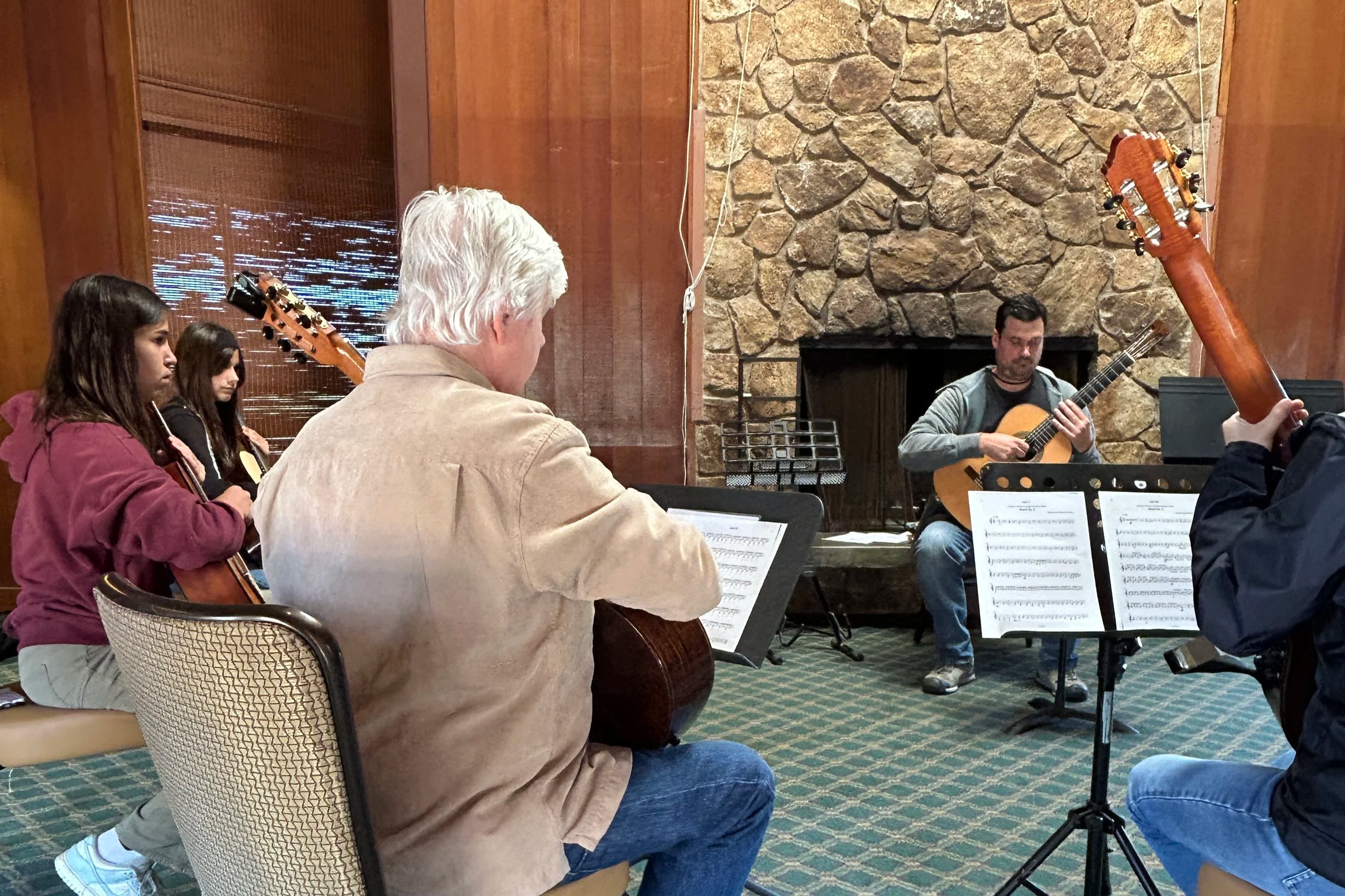
Leading a workshop with Carmel Guitar Society Retreat attendees at Asilomar Resort in Pacific Grove, CA (June 2024)
My philosophy and approach to lessons become more defined
Since I started teaching guitar to students in 2005, my approach and philosophy have continued to evolve. The landscape of learning has changed as well. YouTube tutorials, virtual lessons, and digital resources can certainly help someone build a foundation, learn chords, and get comfortable calling themselves a beginner. Those tools can even encourage regular practice. But the rubber meets the road in personal settings.
Nothing replaces the nuance of sitting in the same room with a teacher, reading the music together, listening closely, and responding in real time. That is where problems are solved, technique is refined, and musical understanding deepens. The same is true for group learning. Playing beside peers, learning to follow a conductor, blending tone, matching articulation, and listening to others in an ensemble are skills that cannot be developed through screens.
Beyond the basic building blocks of guitar learning, I teach tone production, phrasing, interpretation, sight reading, musical expression, and ensemble skills. My students learn how to create a beautiful sound and how to express music with intention. Whether someone is six years old or somewhere in their nineties, classical guitar offers a lifelong path of challenge, discovery, and joy.
My goal is to help students become confident, expressive musicians who understand that improvement is not about perfection, it is about steady and thoughtful progress. Some students want to play their favorite songs at home. Others perform in recitals, join ensembles, or work toward advanced repertoire. Every goal is welcome and every student matters.
Teaching is not separate from my work as a performer and luthier. It is connected to everything I do. The patience, attention, and detail required to build a guitar are the same skills required to teach one.